Appearance
The Color Wheel
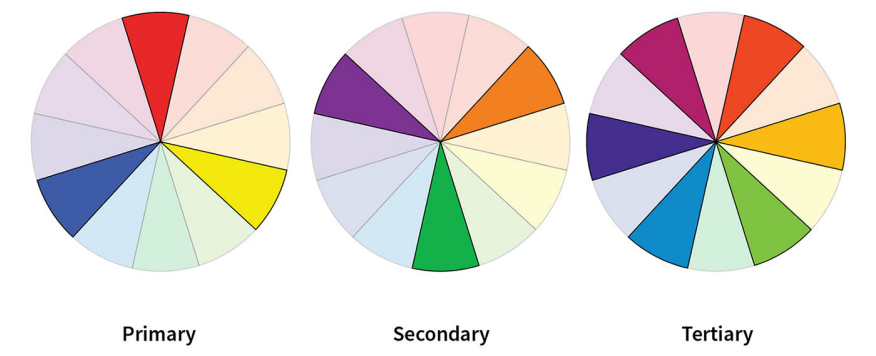
The color wheel is the fundamental tool for identifying relationships between colours and building harmonious palettes.
Color Sets
The wheel is built from primary colours (red, yellow, blue), which mix to create secondary colours (purple, orange, green). Tertiary colours are the in-between hues created by mixing a primary colour with an adjacent secondary colour.
Color Relationships
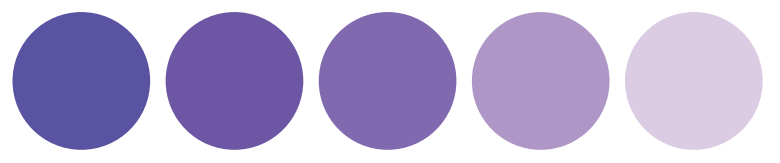
Monochromatic
Uses various shades and tints of a single hue, creating a harmonious and non-overwhelming feel.
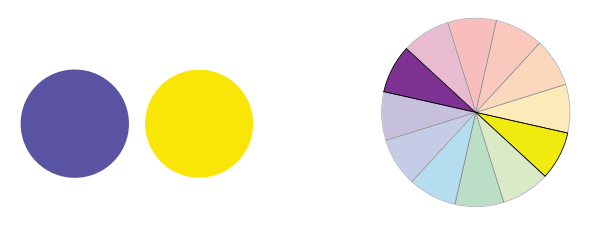
Complementary
Uses colours directly opposite each other on the wheel, creating high contrast that is effective for drawing focus.
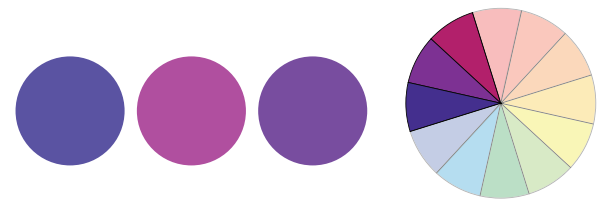
Analogous
Uses three colours sitting next to each other, resulting in a pleasing, low-contrast scheme often found in nature.
Triadic
Uses three colours evenly spaced in a triangle format, which can be intense and usually requires one dominant colour with two accents.
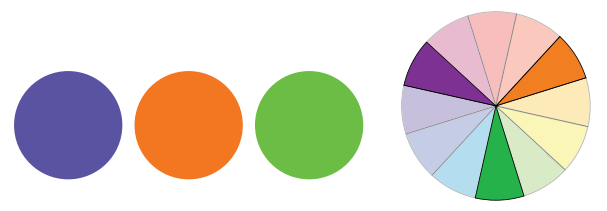
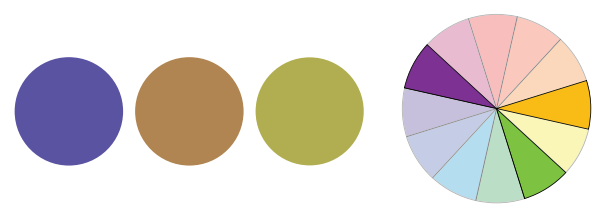
Split Complementary
Uses a base colour and the two colours adjacent to its direct complement, providing high contrast with less tension than a standard complementary pair.
← Previous: Color Terminology | Back to Color Theory | Next: Color Psychology →